Better Care, Lower Costs: Scaling Evidence-Based Practices Across Health Plans
A well-documented health policy challenge exists across the United States and within California’s behavioral health landscape: uneven access to evidence-based practices (EBPs) in mental health and substance use disorder services across payer and provider types. In California, commercial health plans are not universally required to implement specific EBPs. While strong mental health parity laws require coverage, they do not mandate the use of particular therapies.
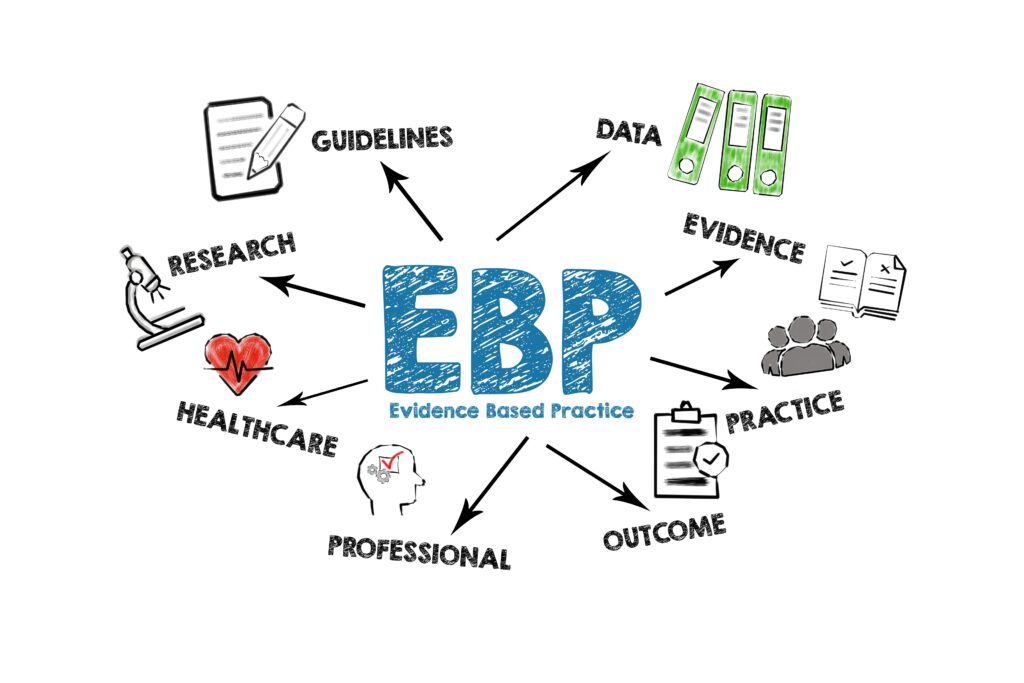
In contrast, publicly funded systems such as county mental health programs within Medi-Cal, along with university and academic clinics, have been primary drivers of EBP implementation. These systems often receive targeted funding, mandates, and resources to support training and fidelity monitoring for interventions such as High Fidelity Wraparound (HFW), Assertive Community Treatment (ACT), Multidimensional Family Therapy (MDFT), and Cognitive Behavioral Therapy (CBT). Through initiatives such as BHSA and BH-CONNECT, the California Department of Health Care Services (DHCS) continues to expand EBP access and fidelity monitoring, primarily within Medi-Cal. However, extending consistent access into the commercial sector remains an ongoing challenge.
The result is a patchwork system of care, with variation in approaches that can lead to inconsistent outcomes, ineffective or even harmful treatment, and growing distrust in behavioral health systems.
From a system-level perspective, the decision to implement EBPs is no longer optional. It is both an economic and ethical mandate. EBPs improve outcomes while reducing long-term costs.
Although EBPs are well established, their widespread adoption within commercial health plans faces financial, administrative, and cultural barriers. This gap cannot be overlooked. Commercial health plans cover nearly half of Californians, approximately 47 percent according to the California Health Care Foundation. When EBPs are not consistently accessible or fully covered, access to the most effective, cost-efficient, and outcomes-driven care is limited. For commercial health plans, the path forward is clear: implementing EBPs is not only a clinical priority, but a strategic imperative for both fiscal sustainability and population health.
The Strategic Necessity of EBP Implementation
Adopting a proactive EBP strategy strengthens the payer-provider relationship and delivers measurable benefits across clinical outcomes, operational efficiency, and long-term financial performance.
Improved Patient Outcomes
EBPs are grounded in scientific research, supporting better clinical decision-making, reducing errors, and improving patient safety. When implemented with fidelity, they consistently produce higher-quality care and better outcomes.
Continuity Across Settings
Because EBPs are standardized and guided by clinical frameworks, they reduce fragmentation and conflicting approaches across care settings. This consistency improves both provider coordination and patient experience.
Population Health and Responsive Care
EBPs can be adapted to meet the needs of diverse populations, including youth, older adults, and culturally distinct communities. When implemented with cultural responsiveness and contextual awareness, they help address disparities and improve engagement and outcomes.
Clinical Consistency and Scalable Quality
EBPs establish a shared framework that aligns care processes while allowing for thoughtful adaptation. Standardization does not mean one-size-fits-all. Instead, it provides a stable baseline that enables clinicians to adjust care while maintaining fidelity and tracking outcomes effectively.
Targeted Treatment Cycles
EBPs offer structured, goal-oriented approaches with measurable outcomes. Models such as CBT, Motivational Interviewing (MI), and Medication-Assisted Treatment (MAT) help reduce unnecessary or prolonged care while supporting clinically appropriate flexibility for complex cases.
Better Transitions Across Levels of Care
EBPs support continuity as individuals move between levels of care, from inpatient to outpatient settings. They equip individuals with practical skills, coping strategies, and relapse prevention tools that extend beyond formal treatment.
Streamlined and Standardized Care
EBPs create a consistent foundation for care delivery, reducing variation and supporting high-quality, reliable outcomes across systems.
Enhanced Workforce Development
EBPs strengthen provider confidence and decision-making by grounding practice in evidence and data. This fosters a culture of continuous learning and professional growth.
Cost Efficiency and Reduced Waste
By prioritizing interventions with proven effectiveness, EBPs direct resources toward treatments with a higher likelihood of success. While no intervention is universally applicable, EBPs reduce reliance on outdated approaches and support more predictable costs and stronger return on investment.
For example, Cognitive Behavioral Therapy (CBT) for major depressive disorder is often structured as a 12- to 16-week protocol. These timelines provide a framework, not a limit. Clinicians can adapt care based on individual needs, such as supporting individuals with intellectual and developmental disabilities (IDD) or responding to emerging trauma, while maintaining a structured, evidence-based approach.
The challenge is not what to implement, but how to implement effectively.
The primary barrier is not resistance to evidence, but the complexity of system-wide change across large provider networks.
Successful implementation requires more than training. It requires structured support, data-driven strategies, and expertise in implementation science to translate evidence into practice.
Moving beyond a “train and hope” approach means addressing real-world barriers such as workforce capacity, organizational readiness, and resource constraints. EBPs are highly sensitive to their implementation environment. Success depends on leadership, infrastructure, and the ability to integrate these practices into existing systems.
At CIBHS, we anchor our work in implementation science, drawing on established models such as the National Implementation Research Network (NIRN) and NIATx. This approach ensures that initiatives move beyond launch and are positioned for long-term success.
By bridging evidence and practice, we help organizations build the systems, processes, and continuous improvement cycles needed to implement with fidelity, adapt to local context, and achieve sustainable impact.