Creating Connections: How Community Cultural Liaisons Foster Wellness and Belonging
CIBHS sees a future where behavioral health systems are trusted and accessible to all, grounded in research, and shaped by lived experience. Every day our teams are working to achieve this vision by helping to build behavioral health systems that are designed to serve all people, shaped by local communities, and grounded in strong evidence. One example of these efforts is through CIBHS’ work in Sacramento and Riverside Counties supporting the integral role of Cultural Community Liaisons (CCLs).
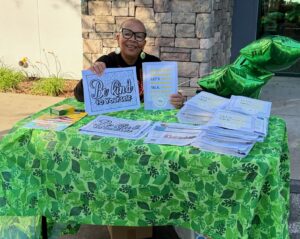
Based on our work in Sacramento County, through our Community Connections Team, we have seen first-hand how this vital work plays an important role in the public behavioral health delivery system by providing support to the hard to reach, hardest to reach, and hardly reached populations in some of the most impoverished neighborhoods of Sacramento County. In essence, CCLs are the connection to “the last mile” of the public behavioral health delivery system.
CIBHS is partnering with Riverside County to support and expand on already existing CCL program this upcoming fiscal year with nine CCLs across a diverse range of communities, including LGBTQ+, Latine/Hispanic, Black/African American, Faith-Based, Asian Pacific Islander Desi American & Native Hawaiian, Deaf/Hard of Hearing, Middle Eastern, Native American/American Indian, and People with Disabilities. By serving as trusted mirrors of the people they support, these liaisons ensure that care is not just available, but culturally meaningful. But what exactly does a day in the life of a Cultural Community Liaison look like, and how do they fundamentally transform how care is delivered? Let’s break down who they are and the vital work they do.
What Is a CCL and What Do They Do?
CCLs serve as a vital, trusted bridge between the County Behavioral Health Services agency and diverse local populations to ensure mental health and substance use services are culturally responsive, accessible, and grounded in community trust. They embed themselves directly into grassroots spaces, such as faith hubs, cultural markets, and neighborhood centers and share vital resources on how to access that care and reduce the stigma surrounding behavioral health care. By actively gathering community input, sharing it with county leadership and providing access information, CCLs help dismantle historical mistrust and ensure the true needs of marginalized residents directly shape public health systems.
Tactically, a CCL focuses on breaking down systemic friction and building local capacity through three core areas of action:
1
Lead culturally tailored workshops and outreach events
2
Transcreate educational materials so they resonate deeply within the community
3
Establish strong partnerships with local leaders and grassroots organizations
Additionally, when individuals or families require support, the liaison may provide direct, hands-on guidance to help them navigate complex service networks, facilitating warm handoffs to county clinics and resolving practical barriers like language or transportation issues. Importantly, the CCL also serves on various county committees and plays a crucial role in the community BHSA planning process, elevating the voices of local community members to county leadership. To maintain transparency and measure impact, they track these efforts through structured monthly documentation, detailing community trends, resource gaps, and successful linkage outcomes.
What Does This Work Look Like in Practice And Why Is It Important?
In practice, CCL work looks less like a corporate desk job and more like active, relationship-driven orchestration, networking, and community building. It means being visible on a Tuesday evening at a local parish hall or food pantry, facilitating an open, stigma-free discussion about behavioral health and wellness in a language that makes sense to the families present. It means taking a phone call from a worried parent on a Saturday afternoon, sitting down with them over coffee to untangle a complex county intake process and talking with them about their appointment so they don’t abandon the commitment from confusion or intimidation. CCL work is the steady unglamorous work of translating complex system bureaucracy into human-sized tangible manageable steps. CIBHS’ Sacramento County based CCL works diligently, passing out information wherever people gather, including places like laundry mats, barber shops, and grocery lines. They always have packets of information available whenever the need arises.
CCL work includes creating folders with important information about mental and substance use disorders, including how to access Medi-Cal services. It is having conversations about 988, it is dropping off flyers at cultural hubs and holding conversations where people feel safe enough to share their struggles.
In a world where loneliness and isolation are an epidemic, CCLs are the antidote. As more and more interactions are happening online and through technology, CCLs are an in-person experience, where we practice active listening, where face to face interactions are a priority that build trust through shared presence and the opportunity to be seen and to foster genuine belonging.

One of my first encounters was at a checkout line in the grocery store, I overheard a man talk about his troubles and how he needed help but didn’t know where to turn. I reached over, touched his arm and said, please wait while I go to my car. Moments later I returned with a packet of resources and showed him the places he could call right away for assistance. That is when I knew this was the right path for me, I could help and normalize these conversations.
CIBHS Cultural Community Liasion
Ericka Lett
CCLs are not merely outreach workers, but rather the practical architecture that turns health equity policies into reality. True equity is not passive; it does not happen simply by publishing a bilingual brochure or hiring diverse staff. CCLs operationalize equity because they are embedded voices directly in the community, trusted by the community, working to move the system from a historical model of passive availability to one of active accessibility. They are the boots on the ground for how we adapt evidence-based practices to serve the most vulnerable populations. They are the speakerphone for the community-defined evidence based practices that are healing our communities. They dismantle systemic friction by resolving real-world barriers like linguistic nuance, geographic isolation, and institutional mistrust, ensuring that county resources are not just technically available, but culturally reachable and functionally designed to serve everyone.
Scaling Equity through CCLs in the Era of BHSA Reform
Ultimately, the success of major statewide reforms like the Behavioral Health Services Act (BHSA) will not be decided in policy papers or implementation plans, but on the ground in neighborhoods across the state. As the state redefines its behavioral health priorities under the BHSA, the ability to maintain a trusted, culturally responsive bridge to historically underserved populations will be the deciding factor in whether these policy reforms succeed or fail.
CCL work is not just a program, it is a responsibility to our Communties!
CIBHS Cultural Community Liasion
Ericka Lett
CIBHS’ CCL work in Sacramento County has progressed from one-on-one encounters to participation in multiple weekly community events. Over time, community hubs have been created with the help of community champions and curated lists of resources in the community are continuously evolving. Behind the scenes, CIBHS supports our CCLs with tools, resources, and practical hands on support on how to best interact and support change or improvement in the county infrastructure while also removing barriers so people can access the resources and services they need.
Through the CCL initiatives, CIBHS is proving that operationalizing equity is entirely achievable when you invest in local trust. There is more work to be done to scale this approach and model across the state. As counties face the complex challenges of BHSA implementation, CIBHS remains a dedicated partner, ready to scale these community-defined models, provide robust technical infrastructure, and ensure that our evolving behavioral health systems are deeply rooted in evidence, shaped by local voice and lived experience, and accessible to all.
The Path Forward
The success of the next generation of behavioral health policy relies on a simple truth: our state’s systems of care can only be as effective as it is reachable. By investing in local trust, we turn the promise of equity into a lived reality.
It truly takes a village to create healthy, thriving communities. The CCL Program embodies this philosophy by bringing together the lived experience, cultural knowledge, and dedication of CCLs with the support and infrastructure provided by organizations such as CIBHS. Working in partnership with counties, CIBHS helps identify and support trusted community representatives, provides technical assistance, and builds systems that allow CCLs to focus on what matters most—connecting individuals and families to behavioral health resources. Together, these partnerships create a stronger, more responsive network of care for communities across California.