Community Connections
Community Connections is a grassroots initiative that brings trusted, culturally responsive mental health and substance use resources directly into Del Paso Heights, reducing stigma, strengthening community connection, and improving access to care in a medically underserved community.
Mental Health Awareness Month: Support Community Connections all month long. All donations received during this month will go to support this work in our local community.
Project Start/End Dates: January 2024-ongoing
Geographic Area of Focus: Sacramento County, Del Paso Heights
Team members: Jennifer Clancy, Ericka Lett
Project Overview
Community Connections is a community-driven initiative that advances equitable access to mental health and substance use disorder (SUD) information by meeting residents where they are. The project strengthens awareness, reduces stigma, and builds social connections to support improved behavioral health outcomes in Del Paso Heights.
Why This Work Matters
Del Paso Heights is a medically underserved community experiencing disproportionate behavioral health challenges, including higher rates of suicide mortality, poor mental health days, excessive drinking, and drug-induced deaths compared to state averages. These disparities reflect longstanding social determinants of health and underscore the need for accessible, trusted, and culturally responsive community engagement.
How This Work Is Done
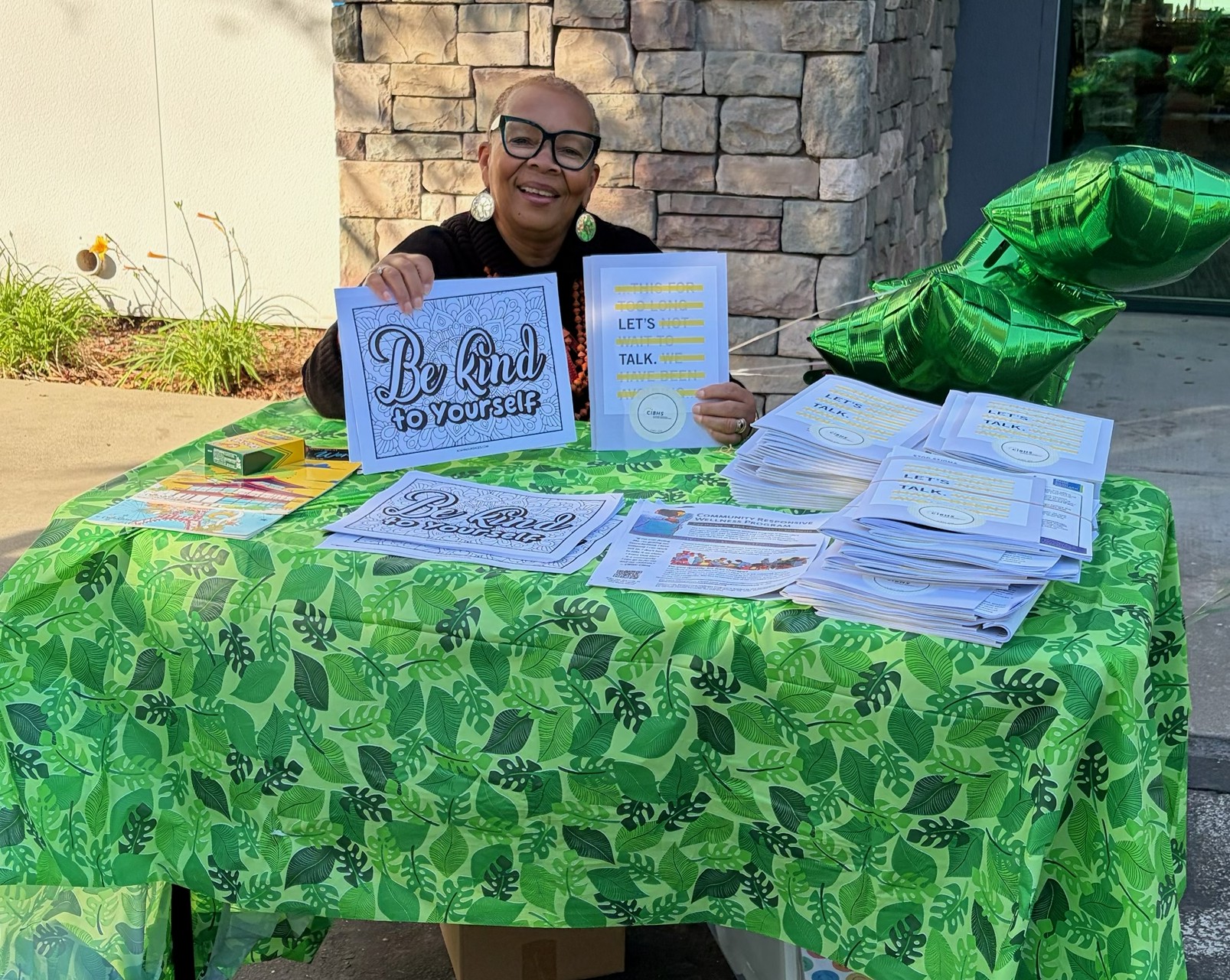
CIBHS engages residents directly in familiar community spaces—such as laundromats, barber shops, churches, and food banks—through face-to-face outreach and culturally aligned messengers. Since January 2024, the project has prioritized relationship-building and trust to ensure information is relevant, actionable, and accessible to community members.
What This Work Delivers
Through thousands of one-on-one conversations and the distribution of more than 3,600 curated resource folders (averaging over 200 per month), Community Connections delivers practical, culturally relevant behavioral health information directly into the hands of residents.
Core Areas of Community Impact
Mental Health Awareness
Building understanding of mental health and common conditions such as depression, anxiety, PTSD, and substance use disorders, while reducing stigma and encouraging help-seeking.
Suicide Prevention
Educating residents on warning signs, supportive communication strategies, and crisis resources, including the 988 Suicide & Crisis Lifeline.
Access to Care
Providing clear guidance on how and where to access local mental health services, including walk-in centers, and how to navigate Medi-Cal for affordable treatment.
Targeted, Bilingual Information
Distributing essential bilingual materials on priority topics such as teen substance use prevention and the risks of fentanyl overdose.
Normalizing the Conversation
Creating opportunities for open, stigma-free dialogue about mental health, embedding conversations into everyday community settings so support feels accessible, relevant, and responsive.
Center Lived Experience
Elevating the voices of individuals with lived experience to inform strategy, humanize services, and strengthen community trust. Lived expertise is not supplemental—it is foundational to effective design and delivery.
Engage Partners
Partnering with housing communities, faith-based organizations, local businesses, barber and beauty shops, and other neighborhood gathering spaces to meet people where they already feel safe and connected.
Trust-Building
Trust-building is central to engagement—particularly in historically underserved communities. We prioritize consistent presence, transparency, and authentic relationship-building to create lasting pathways to care.