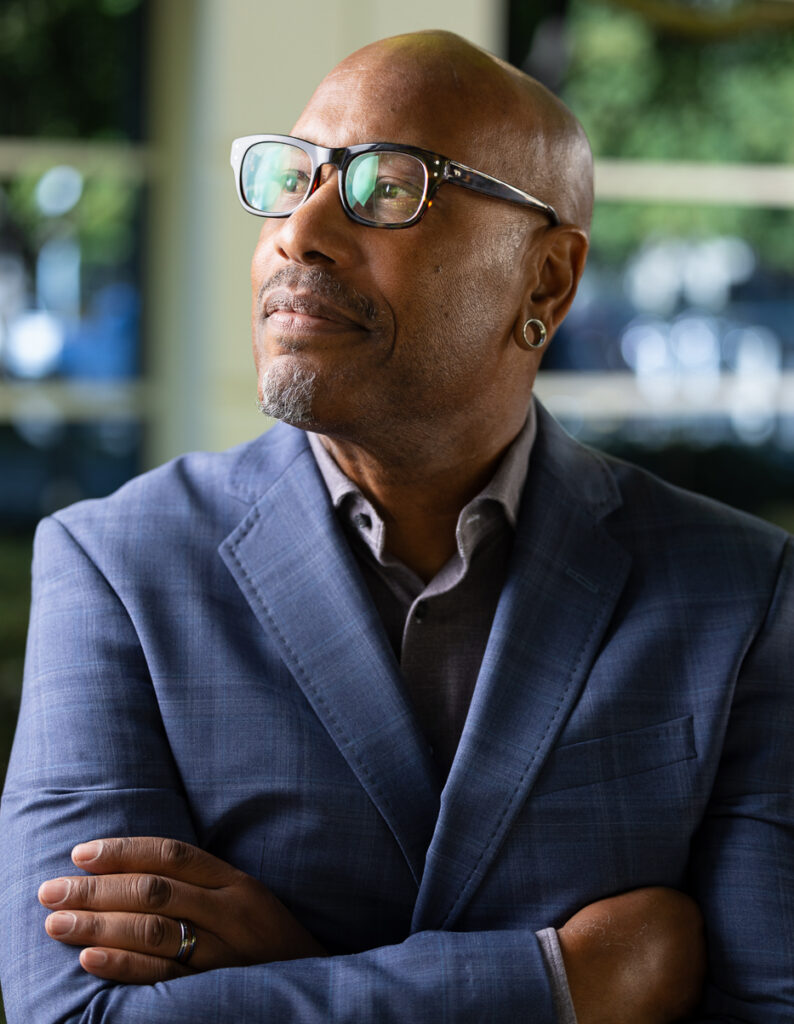
Connection, Community, and Men’s Mental Health: A Conversation with Percy Howard
Continuing CIBHS’ June theme of connection, resilience, and belonging, we are proud to highlight Men’s Mental Health Awareness. While millions of men experience anxiety, depression, stress, and other mental health challenges each year, many remain reluctant to seek help.
At CIBHS, we recognize that mental health is not solely an individual concern, but one shaped by the workplaces, communities, systems, and relationships that surround us. We sat down with CIBHS CEO, Percy Howard, to discuss the current state of men’s mental health, the barriers that continue to prevent many men from seeking help, and the opportunities we have as a field to foster greater connection, healing, and well-being. Below are the summarized highlights from our interview.
It’s Not Weak to Speak
For Percy, the phrase “It’s Not Weak to Speak” is much more than just finding the words to ask for help, but about confronting the isolation that many men experience as they move through different stages of life.
Reflecting on his own journey, he noted that community often narrows over time. The activities that once brought people together change, social circles become smaller, and leadership roles can create unexpected distance. As a CEO, Percy has experienced firsthand how authority can sometimes make authentic peer relationships more difficult to cultivate.
At the same time, he observed that men often build connection differently than women do. While women may be more likely to gather specifically for conversation and emotional support, men frequently connect through shared experiences, hobbies, or activities. Percy recently found himself accepting an invitation to join a group of men in his neighborhood who gather informally each week. What started as a simple evening of conversation became a powerful reminder that meaningful connection does not always begin with talking about mental health. Sometimes it starts with simply showing up, spending time together, and creating space for relationships to develop naturally.
What messages did you receive growing up about asking for help, and how have those messages changed over time?
When asked about the messages he received growing up around mental health and asking for help, Percy reflected that they were often subtle rather than explicit. He was never told that seeking support was wrong, but there was a clear understanding that personal struggles were meant to be handled privately. If help was needed, it was something to discuss quietly within the family and not necessarily something to share openly with friends, peers, or the broader community.
Over time, Percy’s perspective evolved as he entered the field of social work and behavioral health. Surrounded by colleagues, mentors, and professionals who actively challenge stigma and encourage help-seeking, he witnessed a very different approach to mental health, one that was rooted in openness, support, and the belief that no one should have to struggle alone.
Percy also shared that his decision to pursue a career in the helping professions was deeply personal. Like many people drawn to social work, he found himself searching for answers and trying to better understand his own experiences, his family dynamics, and the ways those experiences shaped who he became. What began as a professional path became, in many ways, a journey of healing and self-discovery. Through social work and behavioral health, he gained access to the tools, conversations, and insights that helped him make sense of his own story while supporting others on theirs.
What role do employers, community organizations, and behavioral health systems play in creating environments where men feel supported?
While services such as Employee Assistance Programs, counseling, and wellness initiatives are important, Percy believes their impact is limited if employees do not feel safe accessing them. For Percy, creating a mentally healthy workplace begins with culture. Organizations must consistently communicate that seeking support is normal, encouraged, and confidential. Employees need to know not only that resources exist, but that they can use them without fear of judgment, stigma, or professional consequences. He also cautioned against relying on resources alone as evidence of a supportive workplace. Drawing on experiences throughout his career, Percy reflected on organizations that offered extensive mental health benefits on paper while maintaining cultures that were toxic, controlling, exclusionary, or psychologically unsafe. In those environments, the presence of resources did little to address the underlying conditions contributing to stress and burnout.
Ultimately, Percy believes organizations have a responsibility to “walk the walk.” Supporting mental health means creating workplaces where people feel valued, respected, and safe bringing their full selves to work. Access to resources matters, but lasting well-being is built when organizational culture and organizational values align.
What barriers still prevent many men from talking openly about mental health?
When reflecting on the barriers that still prevent many men from seeking support, Percy pointed to a persistent expectation that men should always appear capable, strong, and self-sufficient. Whether as fathers, partners, leaders, or providers, many men feel pressure to project competence at all times, making vulnerability feel risky and leaving struggles carried quietly and alone.
He also highlighted another often-overlooked challenge: isolation. In many behavioral health organizations, men make up a relatively small portion of the workforce, and increasingly virtual work environments can make meaningful peer connections harder to build. Without intentional spaces for connection, men may find themselves navigating challenges without the community and support systems that help foster resilience. For Percy, supporting men’s mental health requires more than encouraging individuals to speak up. It also means creating environments where connection is possible, vulnerability is accepted, and no one feels they have to carry every challenge on their own.
How can organizations like CIBHS help address those barriers?
When asked what organizations like CIBHS can do to better support men’s mental health, Percy emphasized the importance of intentionality. While many workplaces invest in wellness initiatives, networking opportunities, and affinity spaces, he noted that conversations about men’s mental health are often absent from those efforts.
Rather than viewing support through a clinical lens alone, Percy encouraged organizations to think more broadly about connection and belonging. Opportunities for men to build relationships do not need to be formal or complex. They might take the form of discussion groups, book clubs, wellness challenges, social gatherings, or shared-interest activities that create space for people to connect with one another in meaningful ways.
At the same time, Percy stressed that support must be offered thoughtfully. Creating opportunities for connection should never come at the expense of privacy or autonomy. Employees should not feel pressured to disclose personal struggles or participate in activities that make them uncomfortable. Instead, organizations should focus on creating multiple pathways to support, ones that reduce stigma, protect confidentiality, and allow individuals to engage on their own terms.
What gives you hope when you think about the future of men’s mental health?
When asked what gives him hope about the future of men’s mental health, Percy pointed to the progress he has witnessed throughout his career. While stigma still exists, he believes younger generations of men are increasingly willing to have open conversations about mental health, relationships, and emotional well-being. He is also encouraged by the growing number of resources available today. Drawing from his own experiences in support groups, Percy reflected on the power of connection and the reminder that no one has to navigate life’s challenges alone.
For Percy, the message is ultimately one of hope: support is available, help-seeking is becoming more normalized, and opportunities for connection and healing continue to grow.
As the conversation came to a close, Percy returned to a theme that surfaced throughout the interview: intentionality. He challenges organizations, including CIBHS, to think critically about how they support men’s mental health, not only through resources, but through culture, community, and connection.
While significant progress has been made in reducing stigma, Percy believes there is still more work to do. Creating environments where men feel safe asking for help, building relationships, and finding belonging is not a one-time initiative but an ongoing commitment. And, as he noted, it begins by simply starting the conversation.
As Percy reminds us, the opportunities for connection, support, and healing continue to grow. At CIBHS, we are committed to helping create those opportunities through our work with communities, behavioral health providers, and public systems across California.
Your support helps make that work possible. If this conversation resonated with you, please consider making a donation to help us continue building stronger, more connected communities where mental health and well-being can thrive.